ZCash Bridging
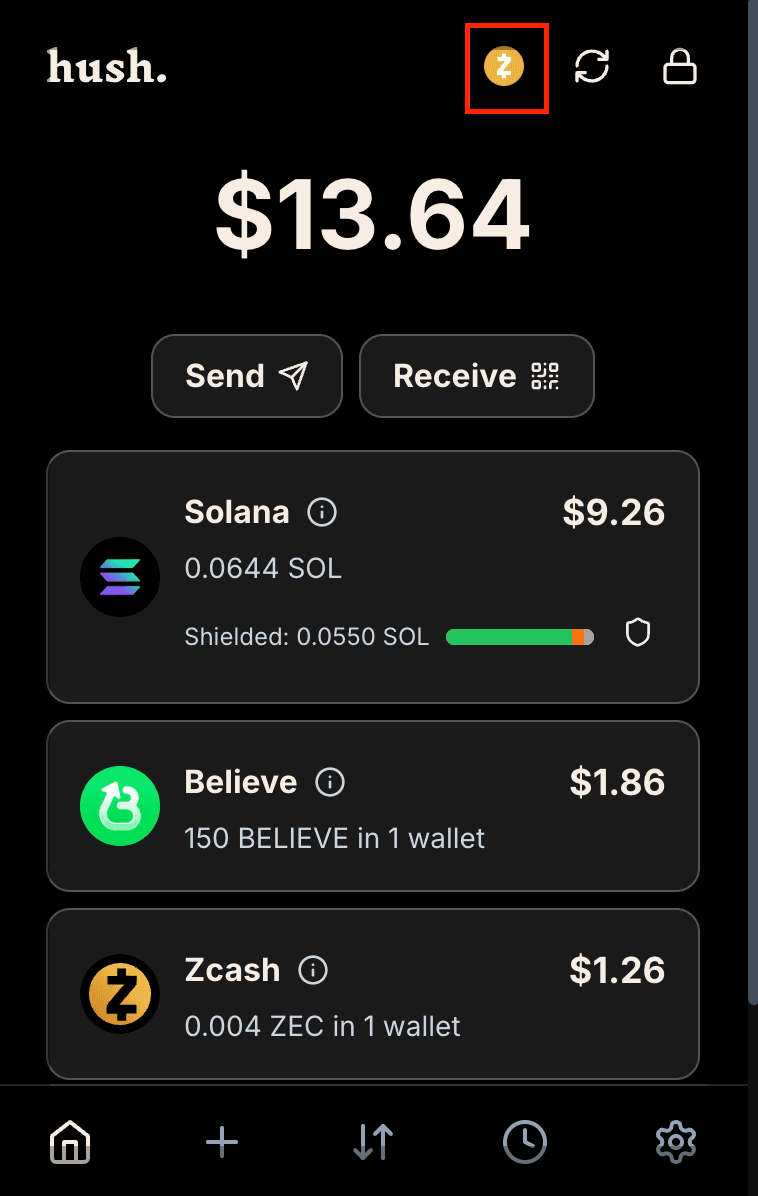
Hush lets you bridge SOL to ZCash through a partnership with Near Intents, a cross-chain bridging protocol. This allows you to move value between Solana and ZCash. The bridge is particularly useful if you want to convert your private Solana holdings to ZCash, which offers native privacy features at the protocol level.
How Bridge Works
The bridge process moves SOL from your Hush wallet to a ZCash address you control. Behind the scenes, Near Intents converts the SOL to ZEC using liquidity pools and cross-chain infrastructure. You receive ZCash directly at your address, ready to use with any ZCash wallet.
Hush maintains privacy throughout the bridge process. You privately send SOL from your shielded balance to a temporary bridge wallet, which then forwards to Near Intents. This two-step process ensures Near Intents never sees your main wallet, and blockchain observers cannot link the bridge deposit back to your holdings.
Bridge Process
Getting a Quote
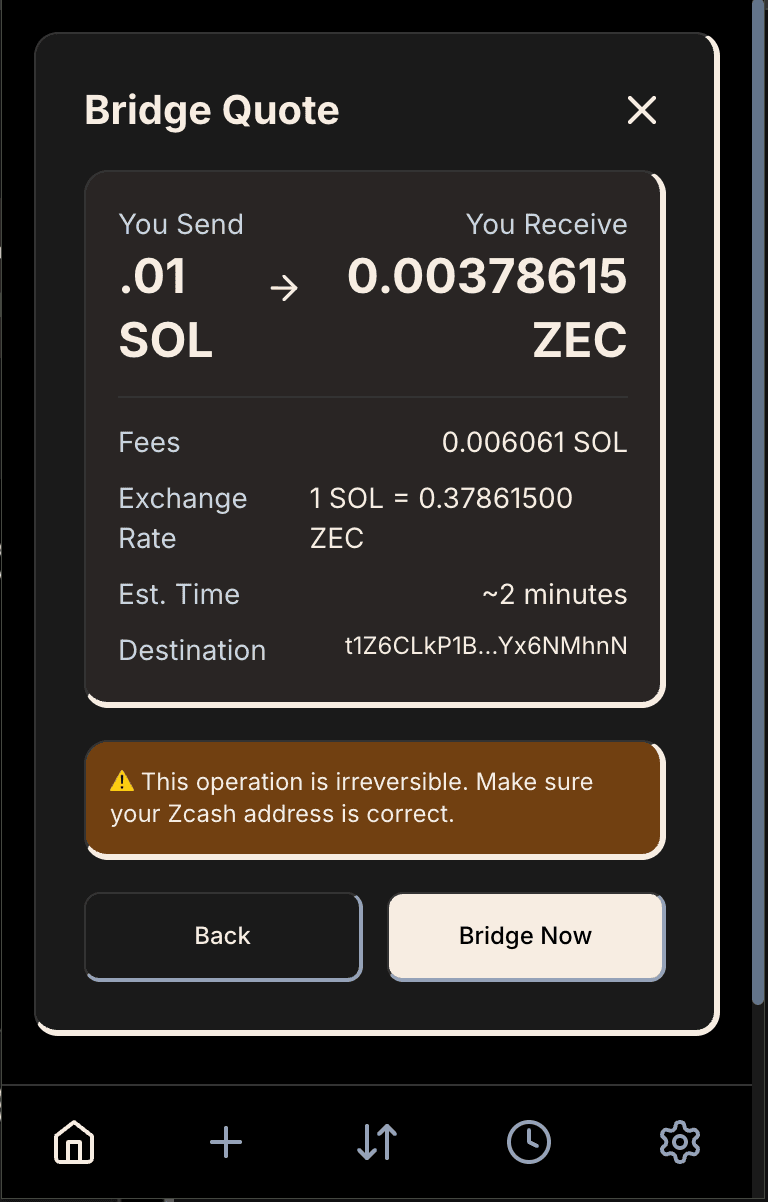
When you initiate a bridge, Hush first fetches a real-time quote from Near Intents. This quote shows the exchange rate between SOL and ZEC, the amount of ZEC you'll receive, and all bridge fees. The quote is valid for a limited time (typically 24 hours) to protect against market volatility. Bridge exchange rates fluctuate based on market conditions and available liquidity, so the final amount might vary slightly from the quote.
Bridge Fees
Multiple fees apply when bridging: Privacy Cash fees for the private send from your shielded balance, Solana network fees for the forward transaction, and Near Intents bridge fees plus cross-chain swap fees (which vary based on market conditions and liquidity). All fees are included in the quote, and the displayed ZEC amount is what you'll actually receive after all fees are deducted - there are no additional hidden charges.
Minimum and Maximum Amounts
There is a minimum bridge amount of 0.01 SOL. The maximum amount depends on available liquidity in Near Intents' pools, but is typically several hundred SOL for most market conditions.
If you need to bridge large amounts, consider splitting into multiple smaller bridges to reduce liquidity impact and minimize slippage. You can execute bridges sequentially, waiting for each to complete before starting the next.
Executing the Bridge
Once you approve the quote, Hush handles the bridge workflow automatically. You'll need to wait for the private send from your shielded balance to complete (this takes time for zero-knowledge proof generation and confirmation). After that, Hush forwards the SOL to Near Intents and registers the bridge request.
Near Intents then validates the deposit, executes the cross-chain swap, and sends ZEC to your specified address. This process can take some time depending on network congestion on both Solana and ZCash.
Monitoring Progress
Hush continuously monitors your bridge's status by querying Near Intents' API. The transaction history shows real-time updates as the bridge progresses through different stages: pending deposit, processing, and complete. You can leave the wallet and come back later - Hush will continue tracking the bridge automatically.
When the bridge completes, Hush displays the final ZCash transaction hash and a link to view it in a ZCash block explorer. You can verify that the ZEC arrived at your address by checking your ZCash wallet or looking up the transaction on-chain.
Bridge Failures and Refunds
Incomplete Deposits
If the SOL deposit to Near Intents fails or is incomplete (perhaps due to sending insufficient amount or network issues), Near Intents will refund the SOL. Refunds are sent back to the temporary bridge wallet address used for the bridge.
Refund processing can take time - Near Intents typically attempts refunds within a day of detecting a failed bridge. Once the refund arrives at the temporary wallet, it becomes eligible for cleanup by the full wallet cleanup flow and/or shield all sol flow. You can use these features to recover the refunded SOL back to your shielded balance.
Bridge Timeouts
If a bridge doesn't complete within a reasonable time, Hush marks it as timed out. This doesn't mean your funds are lost - it means the process is taking longer than expected. You can continue waiting for Near Intents to complete the bridge, or contact their support if it's been significantly longer.
The timeout is just a local status update in Hush. The actual bridge quote from Near Intents remains valid for some time, so even if Hush shows a timeout, the bridge may still complete successfully if Near Intents processes it within their deadline.
Getting Help
If a bridge fails and you don't receive a refund, or if the bridge seems stuck, you should contact Near Intents support. They can look up your bridge using the Solana transaction signature (which Hush displays in the transaction details) and investigate what happened.
Keep the transaction signature handy - it's the proof that you sent SOL to Near Intents' deposit address. This signature is essential for Near Intents support to track down your bridge and help resolve any issues.
Privacy Considerations
Near Intents currently supports transparent ZCash addresses (t-addresses), which start with "t1" and are 35 characters long. These addresses are visible on the ZCash blockchain - anyone can see the ZEC balance and transaction history, similar to Bitcoin addresses. Make sure you have access to a ZCash wallet that can receive to a t-address (eg. Zashi).
While Hush keeps your Solana activity private during the bridge, you should shield the ZEC to a z-address after receiving it to benefit from ZCash's native privacy features. Most ZCash wallets support this operation, which hides amounts and transaction graphs through zero-knowledge proofs.